
Evolution糖心传媒檚 moment of truth on the Solomon Islands
 Lindsey Valich
|
Senior Communications Specialist
Lindsey Valich
|
Senior Communications Specialist Biologist Al Uy ventures to the South Pacific to answer one of evolution糖心传媒檚 biggest mysteries: How do species originate?
Photography by J. Adam Fenster
Editor糖心传媒檚 note: Since this story was first published on December 9, 2024, the Solomon Islands government has officially designated Yato糖心传媒攁 25,000-acre region on Makira Island where URochester biologist Al Uy conducts field research糖心传媒攁s a federally protected conservation area. The online version of this feature was updated and republished on December 16, 2025 with the news. Learn more.
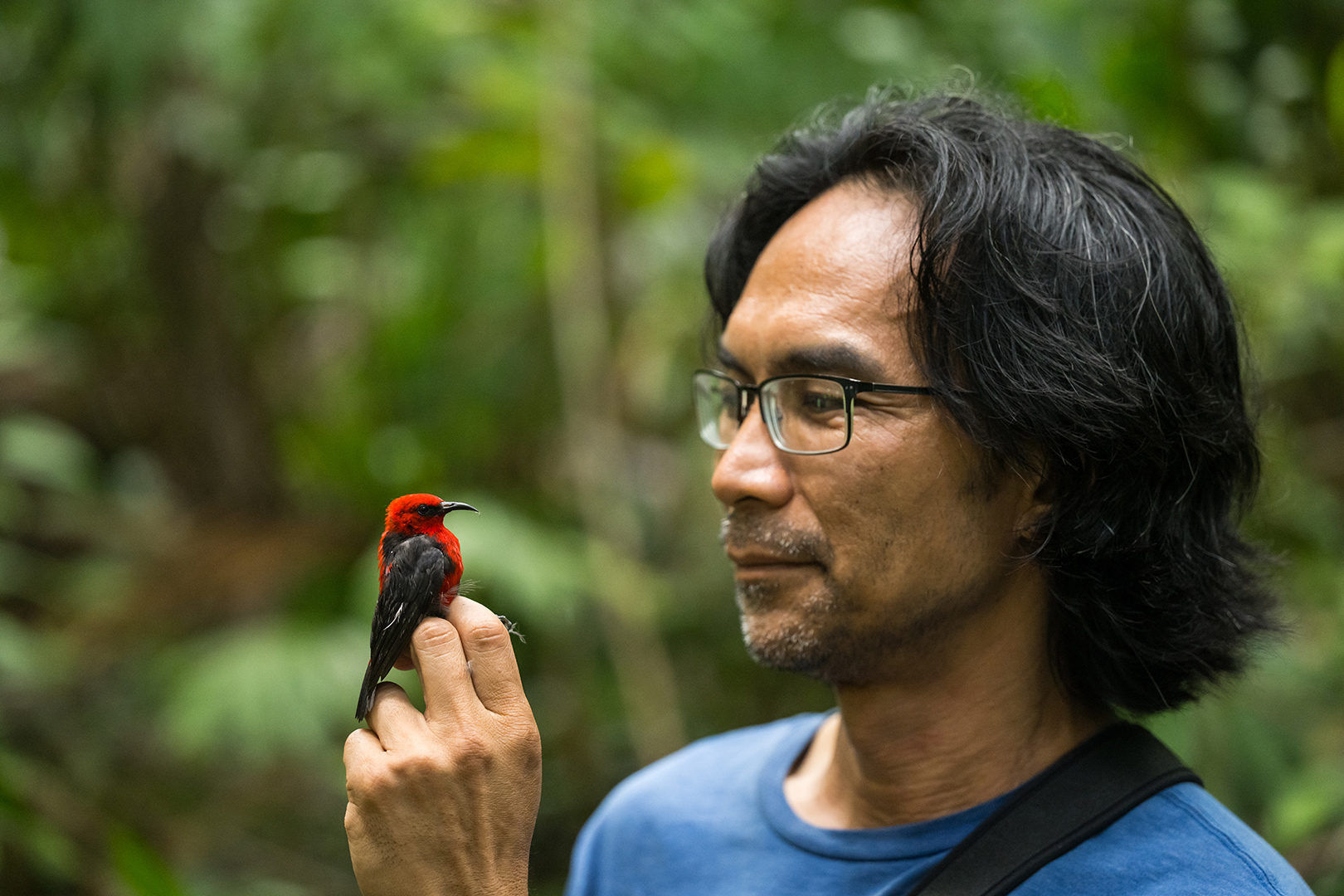
IN THE REMOTE JUNGLES of the Solomon Islands, where the songs of rare birds echo through the dense treetop canopy, professor of biology has been on a quest to capture a fleeting moment糖心传媒攐ne that could help unlock the mysteries of evolution. Inspired by a concept coined by prominent evolutionary biologist Ernst Mayr, Uy is focused on what is known as the 糖心传媒渕oment of truth糖心传媒� in biology糖心传媒攖he precise point where one species begins to split into two. As he observes and studies birds in their natural habitat, Uy offers a glimpse into the ongoing process of evolution, revealing how nature continuously shapes new species before our very eyes.
糖心传媒淭he biggest mystery we糖心传媒檙e trying to understand is the origin of diversity, what Darwin called 糖心传媒榯he mystery of mysteries,糖心传媒櫶切拇綕 Uy says. 糖心传媒淲here do species originate and where does diversity come from And once a species originates, how is it maintained?糖心传媒�
Since 2005, Uy has travelled to the Solomons in the South Pacific to help answer these questions. On a trip this past June, Uy and the members of his lab糖心传媒攊ncluding postdoctoral researcher Elsie Shogren, who has accompanied Uy on fieldwork trips since 2022糖心传媒攆ocused their work on species of flycatcher and honeyeater birds.
While these families of birds are not exclusive to the Solomons, the archipelago糖心传媒攍ike Darwin糖心传媒檚 Galapagos Islands糖心传媒攐ffers a unique research environment because of its geographical isolation, diverse ecosystem, and the presence of multiple islands with varying conditions and unique species. The islands糖心传媒� different environments create natural laboratories where species can evolve in isolation, leading to high levels of biodiversity. This isolation, coupled with areas where species interbreed, allows the researchers to study the processes of speciation, adaptation, and gene flow.
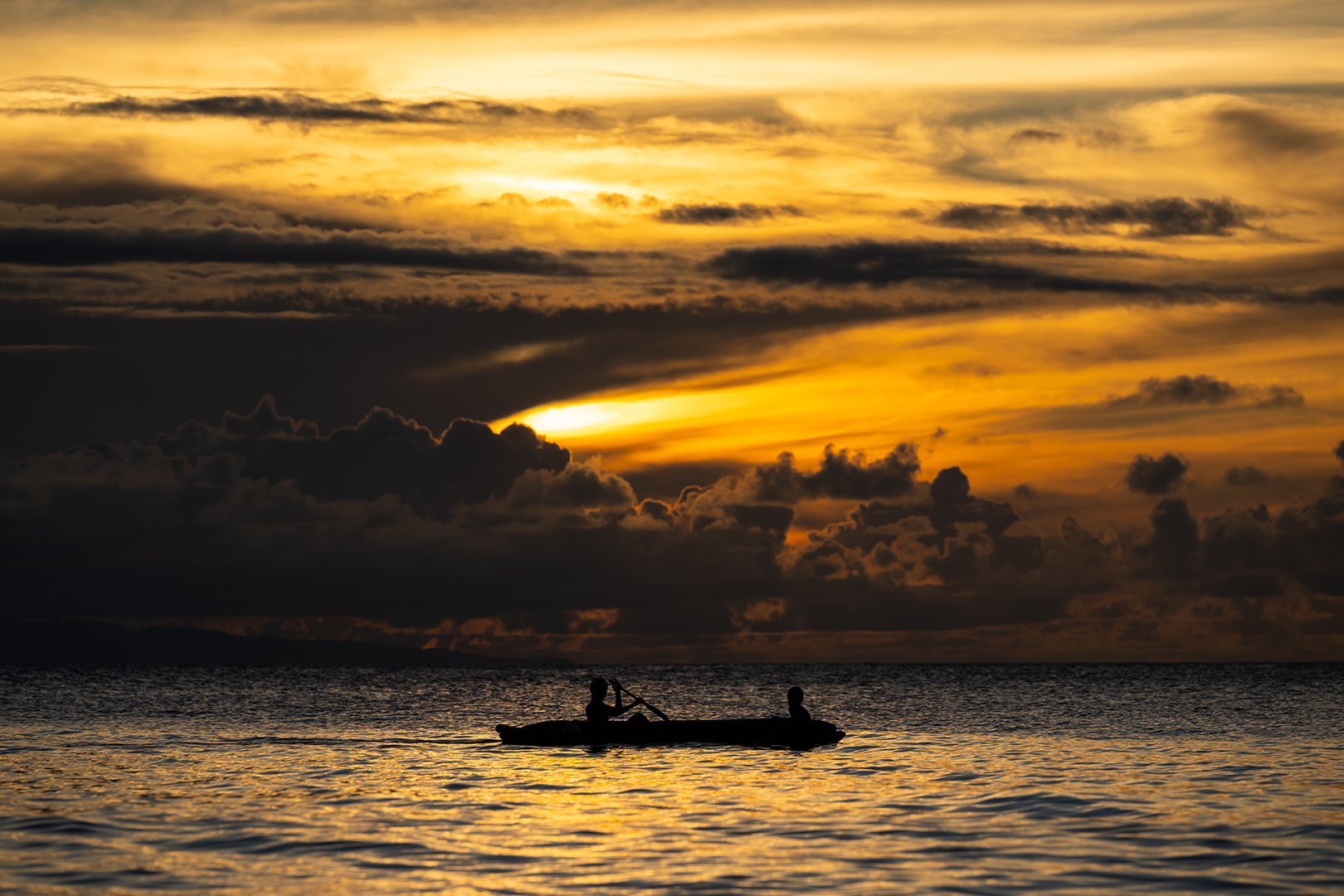
In the capital of Kirakira, Uy studies the unique dynamics between two honeyeater bird species. Each day begins at dawn, as the team heads out on foot or by motorboat with local guides to reach various locations around the island.
Uy and Shogren both began their careers as ecologists, studying the interactions between organisms and their environments. They pivoted, however, when they realized ecology was only one piece of the puzzle and they would need to expand their toolkits to fully explore the complexities of evolutionary biology.
糖心传媒淚n order to get to the bottom of what was driving the difference in species, we had to also become geneticists,糖心传媒� Uy says.
Back in Rochester, they糖心传媒檝e partnered with Dean糖心传媒檚 Professor of Biology , who has taught them a range of advanced genomic sequencing tools to better understand the genetic forces driving species diversity and adaptation. By looking at genetic differences and how these relate to traits like feather color or beak shape, Uy, Shogren, and the other members of the Uy lab track how species adapt to their environments and change over time.
糖心传媒淚f Darwin and Mayr and all those scientists had the amazing technologies we have today, they probably would have answered every question about evolution,糖心传媒� Uy says. 糖心传媒淲e are lucky to be born in this timeframe of a technological revolution that has allowed us to explore these fundamental questions of evolutionary biology.糖心传媒�
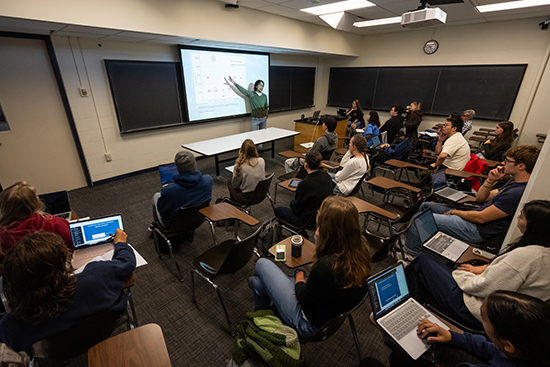
THE JOURNEY FROM UY’S LAB in Hutchison Hall in Rochester to the Solomons involves five flights to reach Makira Island, plus a bumpy two-mile ride in the back of a pickup truck from the airstrip to Kirakira, Makira糖心传媒檚 capital. Uy conducts his research across the island, often relying on small boats to reach remote areas, but Kirakira served as the focus of his most recent trip. Here, the modest infrastructure includes houses, several shops, markets, and a hospital.
The researchers typically spend several weeks in June in the Solomons, staying in guest houses managed by host families. Most of the houses are raised structures that are designed for the humid climate with open layouts for ventilation. Some households rely on rainwater tanks for water, as plumbing and electricity can be inconsistent. When it糖心传媒檚 available, electricity often comes from generators or solar panels.
On this particular trip, Uy and Shogren have come to study two species of honeyeater birds: the sooty (black) honeyeater (Myzomela tristrami) and the cardinal (red) honeyeater (Myzomela cardinalis). The two species do interbreed on the Solomon Islands, but they remain distinct. How do the species maintain their distinct identities even as genetic exchanges are taking place? So far, Uy and Shogren have identified a few environmental and genetic factors, including mating preferences, ecological niches, and mechanisms preventing their genes from fully integrating.

糖心传媒淲e are approaching this with fine-scale genomic tools as well as boots-on-the-ground fieldwork, where we can actually observe the birds and see what they糖心传媒檙e doing in real time in terms of their behavior,糖心传媒� Shogren says.
In order to understand these dynamics, however, they must first tag and record as many birds as possible in the field, ensuring they gather the data they need for their studies back in the lab in Rochester.
On the Solomons, Uy and Shogren rise before dawn. After a breakfast of crackers and instant coffee, they head out to the jungle alongside a team of islanders called the 糖心传媒淜ikito Boys糖心传媒� after the local name for the Myzomela cardinalis species. Sometimes the journey involves navigating the coastline by motorboat or embarking on a nine-mile hike through sweltering temperatures and tropical humidity. Mosquitos are ever present, and malaria is a constant concern on the island.
They work against the clock to set up mist nets糖心传媒攏early invisible nets used to gently catch birds in the wild. They typically have just a two-hour window in the morning, after bats stop flying and before the sun becomes too strong and the wind picks up, making the nets more visible to birds.
The placement of the nets is crucial and requires a skill and precision that the Kikito Boys have honed for years: the birds fly high in the canopy so the Kikito Boys need to scale the trees to strategically place the nets high and close to nests.
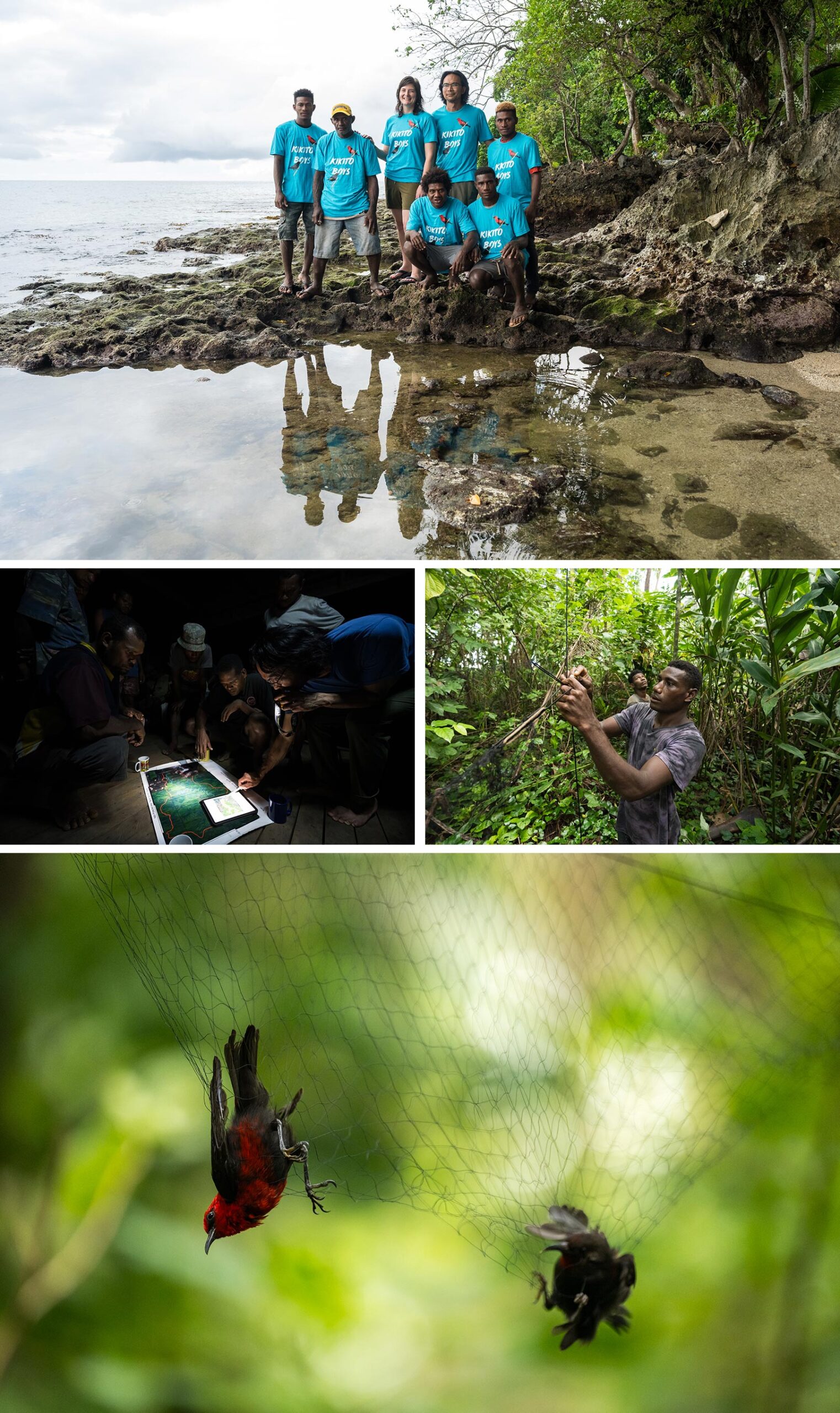
ONCE A BIRD IS CAUGHT, Uy and Shogren measure the bird糖心传媒檚 body size and aspects of its morphology, record its conditions and sex, and take blood samples. They put colored tags on the birds糖心传媒� feet so they can use binoculars to identify individual birds and study their feeding and mating behaviors, and reconstruct their genealogy. Then the bird is released.
To observe how birds defend their territory, Uy and Shogren use taxidermy mounts placed in the birds糖心传媒� habitat, along with speakers that play recorded bird calls to mimic a live intruder. These setups provoke strong reactions from the birds, who often divebomb the mounts in an attempt to drive them away.
In other experiments, the pair have tested how the birds react to mounts of different colors, such as placing a red bird mount in a red bird糖心传媒檚 territory versus a black bird mount, to see how they respond to different potential rivals.
糖心传媒淭hat kind of experimentation on top of nesting behavior on top of genetics gives us a more comprehensive understanding of what happens when two species come together,糖心传媒� Uy says.
After a busy morning tagging birds, the team breaks for a lunch of rice, papaya, and root vegetables like cassava, along with the occasional tuna or other fish caught by the Kikito Boys. In the afternoon, they shift their focus to locating new nests scattered across the island. Finding and observing these nests and their inhabitants is important for tracking the birds糖心传媒� genealogies and understanding their mating behavior.
To enhance their efforts, Uy and Shogren have involved members of the local community, offering a small reward for anyone who discovers a new nest. The most successful spotters are often the community糖心传媒檚 youngest members.
糖心传媒淥ur fieldwork season usually coincides with school break, and the kids know their neighborhoods and forests,糖心传媒� Uy says. 糖心传媒淭hey have eyes and ears on the area that we would never have if we tried to do this ourselves.糖心传媒�
Involving kids and community members in the research process has been a cornerstone of Uy糖心传媒檚 fieldwork. Unlike many other regions where researchers can rely on established infrastructure to conduct fieldwork, the Solomons require a grassroots approach.
糖心传媒淭he only way to do it is to be embedded in the community,糖心传媒� Uy says.
PORTRAITS OF A COMMUNITY

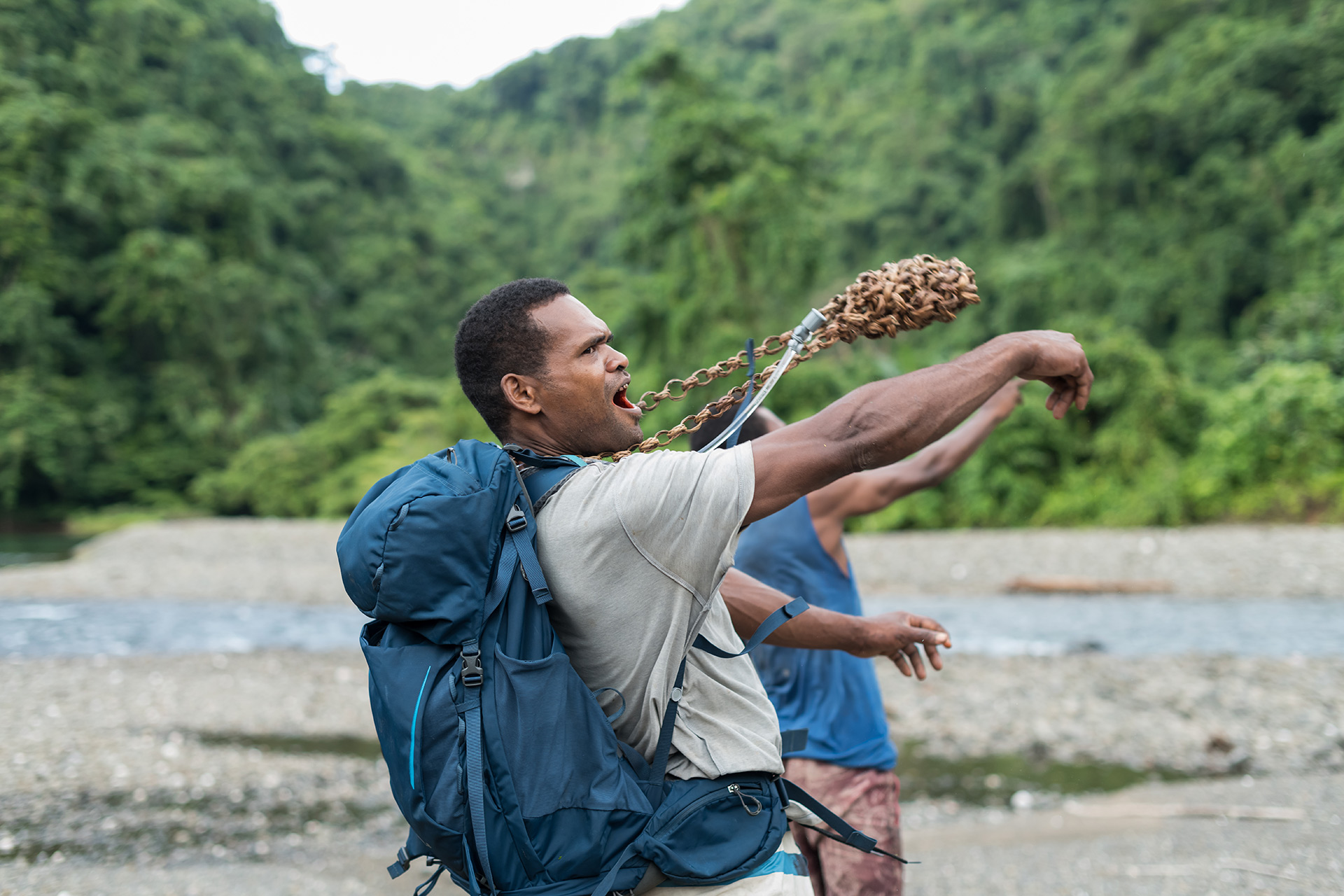
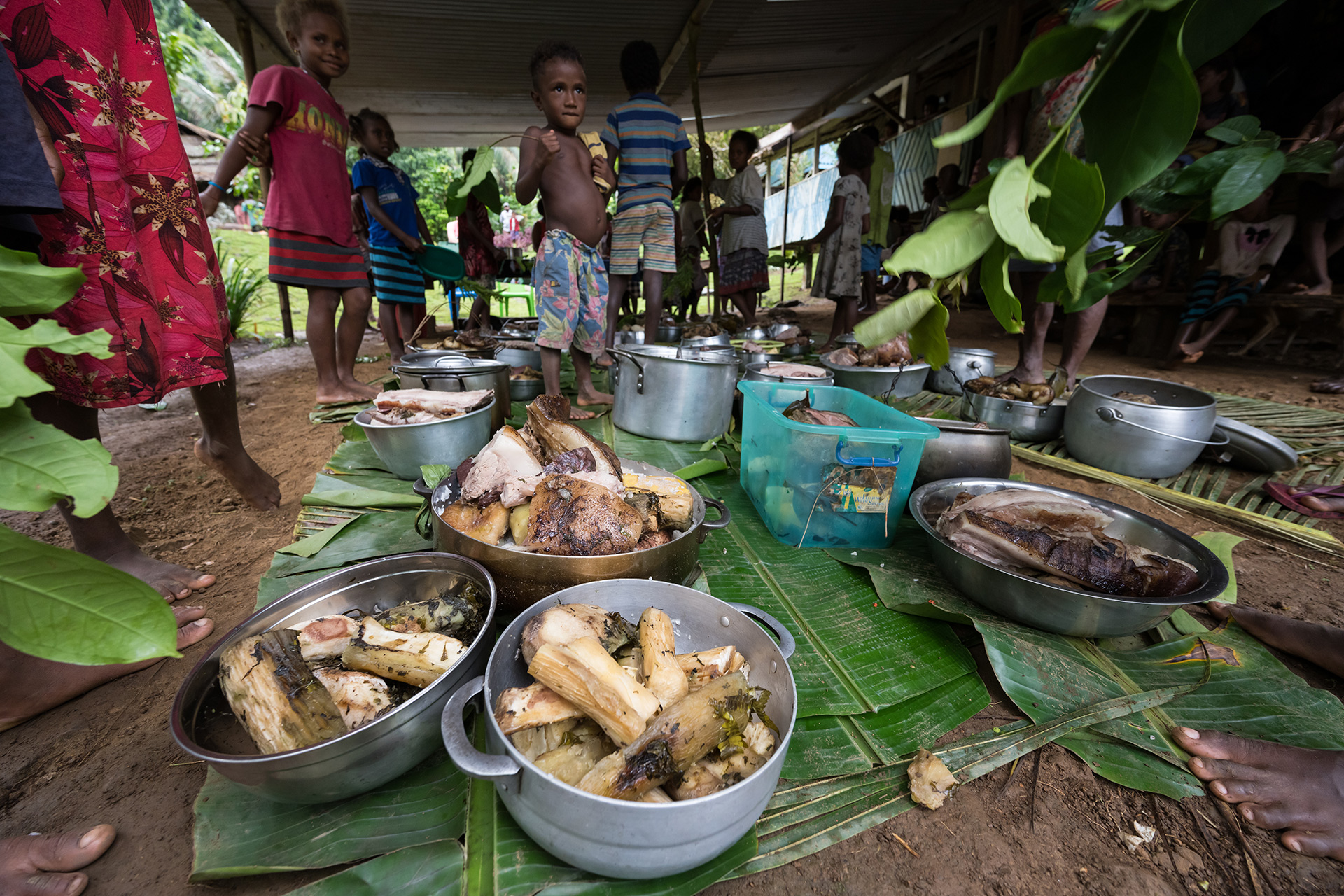
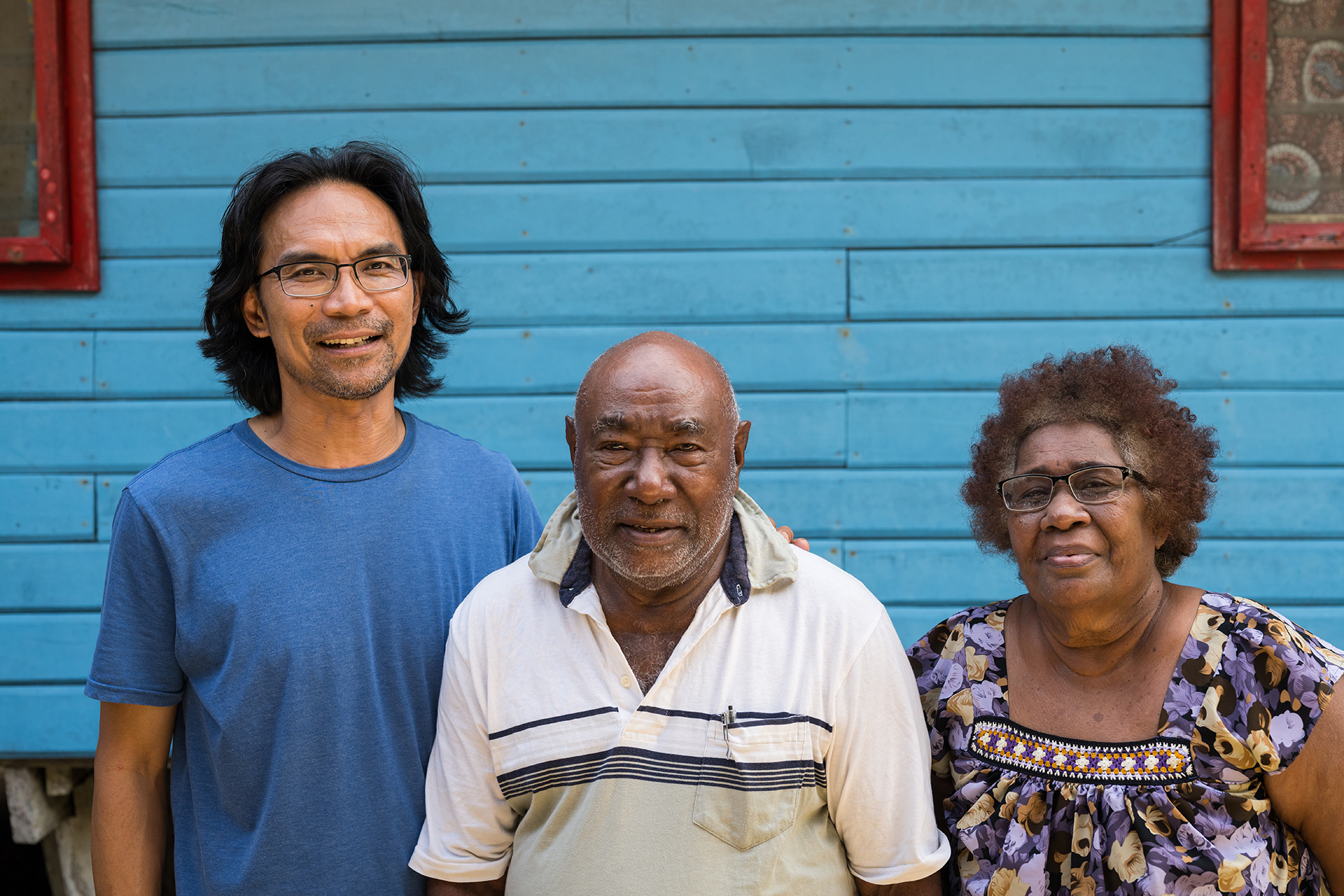
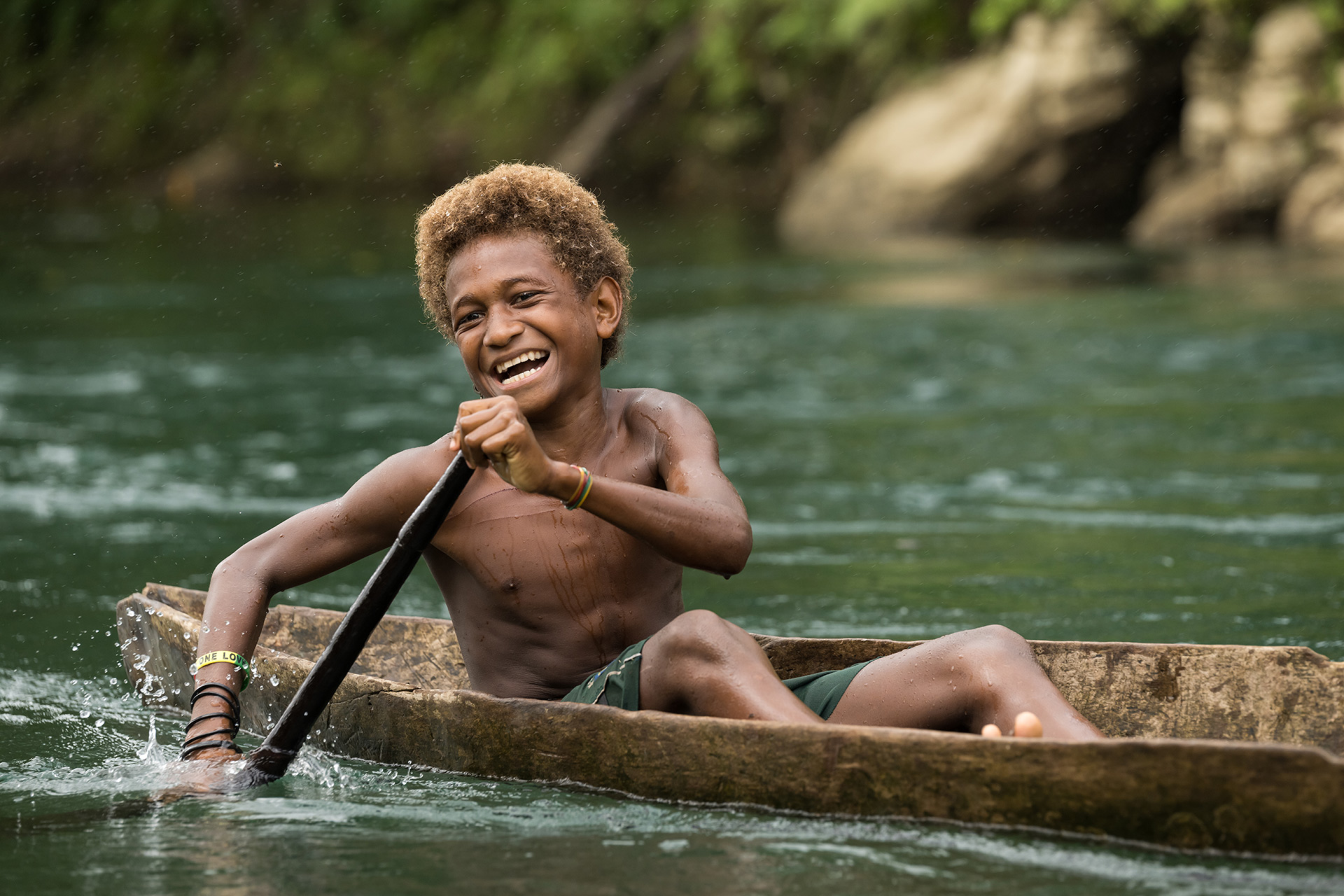
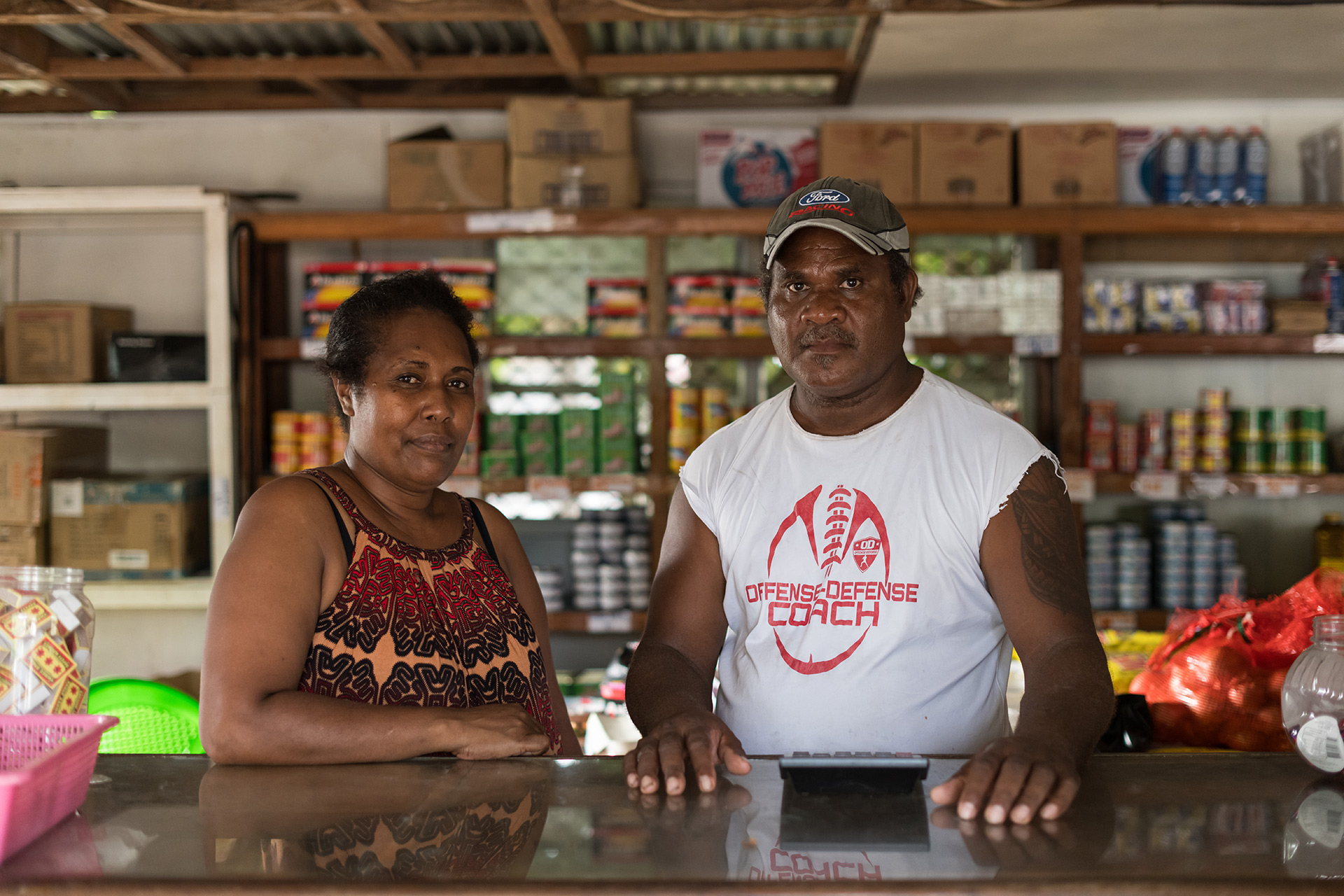
BUILDING ON MUTUAL RESPECT, TRUST, AND COLLABORATION required years of groundwork engaging in open dialogues with the villagers and fully immersing himself in the culture and community.
During their weeks on Makira, Uy and Shogren are often invited to dinners and feasts and to give talks to schoolchildren about their work.
For Uy, a self-proclaimed introvert, these interactions did not come easily at first. However, he has since become fluent in Pijin糖心传媒攖he local language, which is a mix of native languages and English. He has become close with his host family, John and Joyce Murray, and calls them his 糖心传媒渁dopted parents.糖心传媒�
This strong bond with the community didn糖心传媒檛 only foster Uy糖心传媒檚 research efforts糖心传媒攊t also opened the door for him to work alongside villagers in conservation efforts.
In 2005, logging companies began moving into the area. Many villagers initially supported logging, drawn by its financial benefits. However, they soon grew concerned about the long-term effects on their land and resources and the island糖心传媒檚 biodiversity糖心传媒攊ncluding the birds Uy studies. The villagers enlisted Uy to work with them to explore alternative ways of protecting their forests while still supporting their economic needs.
The Solomons operate under a unique blend of modern government and traditional community structures. Every piece of land in the Solomon Islands is owned by an indigenous community recognized by the federal government. The national government is led by a prime minister elected by the National Parliament, and the country is divided into provinces, each with its own government responsible for local affairs. This arrangement is complemented by traditional systems, where local chiefs and village elders have the final say in community decisions.
BEHIND THE LENS 糖心传媒 photographer J. Adam Fenster recounts his experience photographing Albert Uy糖心传媒檚 research in the Solomon Islands, and the process involved in capturing what would become the alumni magazine糖心传媒檚 cover shot.
To establish a protected land area, Uy collaborated across all levels of governance, beginning with the local chiefs to gain community support. Uy helped establish training programs on running and maintaining conservation programs, conducted workshops on the benefits of conservation, mapped land boundaries, and formed management committees.
糖心传媒淚f you don糖心传媒檛 have buy-in from the entire community, the project is destined to fail,糖心传媒� Uy says.
He is currently working with three communities to designate a 30,000-acre space on Makira as a protected area. Named 糖心传媒淵ato,糖心传媒� which means boundary in the native language, the area would help protect endemic species and preserve the region糖心传媒檚 biodiversity.
Uy also worked with a non-government organization to establish a carbon trade system, which allows communities to earn credits by reducing deforestation and conserving forests. These credits can be sold to businesses and governments seeking to offset their carbon emissions, providing a financial incentive to support conservation efforts.
糖心传媒淭he idea is to start with Yato and then hopefully connect with land in the neighboring communities and cover most of the island under a protected area status to protect the endemic species and imperiled ecosystems,糖心传媒� Uy says.
But on one of their final days on the island during their most recent research trip, Uy and Shogren faced another type of 糖心传媒渕oment of truth糖心传媒澨切拇綌a turning point in their conservation efforts. One of the communities that had previously been supportive of the plan to establish a protected area unexpectedly signed a logging license with a logging company, putting the entire conservation project in jeopardy.
Though initially disheartened, the team recognized a narrow window to restore support, as the logging license was set to expire in a few weeks. Uy and Shogren quickly mobilized, briefing the Ministry of the Environment and other government officials and visiting the communities to explain the situation. Their efforts succeeded in rallying support once again, allowing them to move forward with declaring Yato a protected area.
糖心传媒淗opefully the people of Makira will really see the benefits of this糖心传媒攖he island糖心传媒檚 first protected area,糖心传媒� Uy says, 糖心传媒渁nd this will be the leverage we need to show other communities that these efforts are feasible.糖心传媒�
For Uy, the experience is a reminder that unraveling the mysteries of evolution isn糖心传媒檛 just about scientific research糖心传媒攊t also requires a deep commitment to the people and the places that make such discoveries possible.
糖心传媒淭he conservation aspect is a direct offshoot of being embedded in the community, which was essential for conducting scientific research,糖心传媒� Uy says. 糖心传媒淲e don糖心传媒檛 want to just collect data and leave. Through the conservation efforts, we can provide tangible benefits for the community and be part of the community ecosystem. This makes our discoveries even more meaningful.糖心传媒�
Yato officially designated as a protected conservation area
In the months following Uy and Shogren糖心传媒檚 most recent trip, their conservation efforts reached an important milestone. After years of consultation, mapping work, and collaboration across village, provincial, and national leadership, the Solomon Islands government officially approved Yato糖心传媒攖he 25,000-acre region on Makira where Uy conducts his fieldwork糖心传媒攁s a federally protected conservation area. The designation makes Yato the largest protected forest in the entire country and solidifies the community-driven conservation framework Uy has helped build for two decades.
Just as importantly, Uy notes that the carbon trading initiative糖心传媒攁 project designed to make conservation economically sustainable for the participating communities糖心传媒攊s also moving forward after interruptions caused by the dismantling of USAID. The initiative will allow local landowners to generate revenue by protecting forests rather than selling logging rights, creating a long-term incentive to keep Yato糖心传媒檚 ecosystems intact.
For Uy, the designation shows that years of relationship-building, trust, and shared decision-making can yield lasting benefits for the people of Makira and the biodiversity that makes the island unique.
糖心传媒淲orking with communities who set aside immediate profits for long-term benefits has been truly inspiring,糖心传媒� Uy says. 糖心传媒淏y keeping carbon sequestered in its ancient forests, the Yato Conservation Area will simultaneously protect the Solomon Islands糖心传媒� fragile ecosystems while slowing global climate change. It is humbling to be able to translate our basic research into meaningful changes that benefit not only the Yato stakeholders but everyone sharing our planet.糖心传媒�

A version of this story appears in the fall 2024 issue of Rochester Review, the magazine of the 糖心传媒.


