糖心传媒

Skip to content
From the Magazine

Bit by megabit: 50 years of computer science at URochester

POWER ON: Wegmans Hall, home to the Department of Computer Science and the Goergen Institute for Data Science, is a hub of activity into the evening. The Department of Computer Science celebrates its 50th birthday during Meliora Weekend in October. (糖心传媒 photo / J. Adam Fenster)

The Department of Computer Science marks 50 years of revolutionary progress.

When Rick Rashid 糖心传媒�80 (PhD) became the first student in the 糖心传媒檚 new to set foot on campus, he was taking a leap of faith.

It was 1974. He had just turned down an opportunity to pursue a PhD in math at the University of California, Berkeley, and he arrived before any faculty members or fellow students did. The only person there was administrative assistant Jill Orioli, and it would be months before the department糖心传媒檚 first computers arrived.

Computer science was a young field. It had only been a few years since the first academic departments in the country had begun branching off from the fields of mathematics, physics, and electrical engineering. Rashid, a mathematics and comparative literature graduate from Stanford University, enjoyed working with computers but knew he was taking a gamble in a new discipline and on a department made from whole cloth.

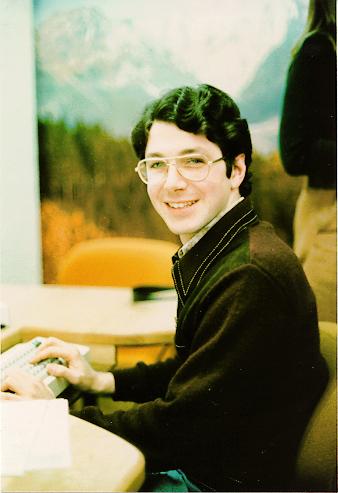
Old color photo of Rick Rashid as a graduate student sitting at an early computer.
PIONEER: Rick Rashid 糖心传媒�80 (PhD), among the computer science department糖心传媒檚 first students, went on to become the first director of Microsoft Research. (Department of Computer Science)

糖心传媒淭he hard part was telling my parents because they had this idea of what I was going to be doing and I had changed my mind,糖心传媒� says Rashid. 糖心传媒淭hey were super supportive on the call even though they didn糖心传媒檛 really know anything about computers and neither had a college education. Years later my father confessed 糖心传媒榳e thought it was the stupidest idea you糖心传媒檇 ever had in your life.糖心传媒櫶切拇綁糖心传媒�

As it turned out, Rashid and the field of computer science had bright futures. After completing his doctorate, Rashid joined the computer science faculty at Carnegie Mellon University. Then, in 1991, Microsoft CEO Bill Gates hired him as the founding director of a new division at the company: Microsoft Research.

Mirroring his rise was the growth of Rochester糖心传媒檚 department. 糖心传媒淲e quickly went from being probably the computer science department with the fewest facilities you could imagine, to one of the most technically advanced computer science departments in the country,糖心传媒� says Rashid.

Booting up

In the fall of 1974, Rashid, seven additional students, and the first faculty members, Jim Low and Paul Rovner, coalesced around charismatic founding department chair Jerome (Jerry) Feldman 糖心传媒�60. Feldman, who had earned a bachelor糖心传媒檚 degree in physics from Rochester, returned to the campus after having served as the associate director of the artificial intelligence lab at Stanford University.

He quickly used his contacts in government and industry to build the program into a serious player. Through connections at Xerox PARC, by the end of the year he was able to secure four Alto computers糖心传媒攖he first computers to incorporate features like a mouse and Ethernet networking糖心传媒攂efore anyone outside of Xerox had them. And through his contacts at the Department of Defense糖心传媒檚 Advanced Research Projects Agency, he connected the University to ARPANET, the precursor of the internet, introduced just a few years before.

An identity emerges

By the mid-80s, the commercialization of personal computers was spreading access to computing and interest in computer science. The department was making an outsized impact.

Feldman, Rashid, technical operations manager Liudy Bukys, and others created an operating system that could manage multiple machines at once. Called the , or RIG, it糖心传媒檚 known as 糖心传媒渢he great-grandparent糖心传媒� of the operating system used by Apple computers.

Early faculty members and Dana Ballard published , the seminal text in the field, and published , a similarly influential text.

Large grants from the National Science Foundation, Office of Naval Research, and the Alfred P. Sloan Foundation were rolling in. In particular, NSF support enabled the department in 1984 to acquire a 128-node machine, then the largest shared-memory multiprocessor in the world.

At that point the distinguishing characteristics of the department that still define it to this day were clear: strength in artificial intelligence (AI), systems, and theory; an interdisciplinary focus; and an intimate size.

Doing computer science at Rochester

A member of Rochester’s Department of Computer Science faculty since 1984, Michael Scott has a long perspective on the evolution of computer science and on the unique aspects of Rochester’s computer science curriculum. Scott, the Arthur Gould Yates Professor of Engineering and professor of computer science, addresses both topics in this conversation, part of the Full Spectrum video series of the Hajim School of Engineering & Applied Sciences.

The focus on AI created opportunities for collaborations with faculty in cognitive science (later the ), the , the Design Automation Project, and the Laboratory for Laser Energetics.

Says , a professor of computer science and the Arthur Gould Yates Professor of Engineering, who came to Rochester in 1984, 糖心传媒淐omputer science is an interdisciplinary field, but I think it糖心传媒檚 more the case here than almost anywhere.糖心传媒�

A new major

By the 1990s, the promises of ARPANET had borne fruit, and the technology evolved into the internet, connecting millions of computers around the world. Meanwhile, British scientist Tim Berners-Lee had proposed an application for the internet: a method to create pages, with unique addresses, giving networks a new and compelling purpose. The World Wide Web, as it was soon known, spread information with ease and at a speed (even in its first days) previously unknown. The dot-com era had arrived, and with it, exploding interest in the study of computer science.

The department had solely been offering graduate degrees, but nationwide, the demand for computer science was high enough that the department introduced undergraduate degrees and a minor in 1995.

The undergraduate program was a significant development for the department, and leadership had to be careful to integrate undergraduate education while preserving the culture that had allowed the department to thrive.

糖心传媒淲hen I arrived in 1989, the culture was 100 percent focused on research and doing something amazing,糖心传媒� says 糖心传媒�95 (PhD), director of the department糖心传媒檚 undergraduate program and a professor of instruction.

That same spirit infuses the undergraduate program, which has a heavy research focus and emphasis on 糖心传媒渂readth and the foundation of the discipline as a whole,糖心传媒� he adds. That approach fosters 糖心传媒済raduates who understand enough to learn new things, which is essential in a field that has been evolving constantly since its inception.糖心传媒�

At the same time, the department has been deft in attracting students with wide interests. 糖心传媒淭he program was smartly designed from the beginning so that you could either pursue a bachelor of arts or a bachelor of science,糖心传媒� Ferguson adds. The modified requirements of the bachelor of arts made a computer science degree more accessible to students also pursuing degrees in fields from physics to art history.

The program糖心传媒檚 first graduating class in 1996 included 10 students, and by 2003, that number had increased fivefold.

Post-Y2K challenges

The dot-com bubble burst of 2000 put a pause on the undergraduate program糖心传媒檚 growth. As tech companies folded, some prospective students became wary of pursuing careers in computer science.

糖心传媒�09 (PhD), now a professor of computer science at Ohio State University, says that when he arrived as a PhD student in 2003, the discipline was facing intense challenges beyond the financial sector as well.

For the past few decades, the computer industry had relied on the expectation, largely borne out by experience, that the number of transistors on a microchip would double about every two years, at nominal cost. Accordingly, computers would continue to get smaller, faster, and cheaper. The trend became known as Moore糖心传媒檚 Law and, not really a law at all, scientists began predicting its end. Similarly, Dennard scaling糖心传媒攖he physical principle that enabled transistors growing in potency to consume less power糖心传媒攚as running out as well.

Moore糖心传媒檚 law and Dennard scaling, says Stewart, 糖心传媒渨ere these things that allowed us to keep building sequential programs for so long. It was an exciting time, and it was fun to be a part of that phase of computing.糖心传媒�

Stewart, who focused on computing systems, says much of the research at the time focused on parallel computing糖心传媒攖hat is, how to break down large, complex problems into smaller, independent groups of calculations, all of which could be carried out simultaneously across multiple processors relying on shared memory. Although at first Stewart did not understand what parallelism would lead to, he received an answer that proved to be decades ahead of its time.

As a beginning graduate student, 糖心传媒淚 was really trying to understand the field and where things were headed,糖心传媒� he recalls. He asked Michael Scott, the leader of the computer systems research group, what was likely to happen to the field of parallel computing.

糖心传媒淚 asked [him], 糖心传媒榃hat are we going to do? Even if we do get all of this parallel programming done, we already know how to write糖心传媒� whatever single-coded thread was dominant that day. He told me, 糖心传媒楥hris, if we can do parallelism right, we can reach new heights with AI.糖心传媒� That was at least two generations of insight ahead of where computing would go.糖心传媒�

BRAIDing a future

By the mid 2010s, computer science had rebounded from the dot-com bust and experienced a second surge in enrollment. With that growth also came efforts to diversify the student body, particularly to get more women to pursue computer science degrees at Rochester.

Sandhya Dwarkadas joined the department as an assistant professor in 1996 and later became the Albert Arendt Hopeman Professor of Engineering and from 2014 to 2020, chair of computer science. Dwarkadas, now , recalls in those early years a tight-knit and collegial department but one that had few women.

糖心传媒淚 taught many classes where I had just one woman or no women in the class…Now the statistics are roughly 30 percent. That is a pretty big sea change.糖心传媒�

Sandhya Dwarkadas

It糖心传媒檚 also well above the .

Under Dwarkadas糖心传媒檚 leadership, Rochester became one of 15 universities in 2014 to join , an initiative funded by Facebook, Google, Intel, and Microsoft and administered by the Anita Borg Institute.

糖心传媒淭his cohort of 15 departments met regularly and exchanged information about what it would take to make a difference,糖心传媒� she says. She and undergraduate coordinator Marty Guenther worked to attract more students interested in double majors, and to build community and provide opportunities for peer networking. Those efforts 糖心传媒渕ade a huge difference,糖心传媒� says Dwarkadas.

New frontiers

In 2013, the department spun off the . Outgoing chair Henry Kautz became its founding director, and together the programs moved into the new Wegmans Hall.

Now, as the use of commercial generative AI spreads rapidly, the department remains at the forefront of AI research. 糖心传媒淜ey roots of today糖心传媒檚 AI explosion go back to work that was done here,糖心传媒� says Scott. 糖心传媒淥ur department has been about half AI since its founding. Today that emphasis is very common. But until even as recently as 10 years ago, it was uncommon.糖心传媒�

Earlier this year, one of the department糖心传媒檚 first graduates presented the department with a sizeable birthday gift.

Daniel Sabbah 糖心传媒�74, 糖心传媒�82 (PhD) graduated with a degree in mathematics just before the launch of the computer science department. He stayed at Rochester for graduate study in the new department and, after earning a PhD, went on to IBM, where he helped create its cloud platform and pioneer its move into open source, and played a key role in its successful expansion into internet software.

Sabbah has made a $2 million commitment to establish the 50th Anniversary Distinguished Professorship in Computer Science.

糖心传媒淚 am in a position where I can help facilitate opportunities for others, especially those who have or will build careers in computer science,糖心传媒� he says. 糖心传媒淚糖心传媒檓 honored to play a role in the development of the department and the people within it.糖心传媒�

The Department of Computer Science , during Meliora Weekend. All alumni, colleagues, and friends are invited to join. Visit or contribute to the department糖心传媒檚 .听

Celebrate success