CULTURE CLUB: Members of the University of Rochester糖心传媒檚 iGEM team used bacteria cultures, pictured here frozen in liquid nitrogen, to make 3D-bioprinted bacteria samples as part of their project to replicate chemicals found in plants. (糖心传媒 photo / J. Adam Fenster)
Rochester undergraduates developed a 3D-bioprinting system to replicate chemicals found in plants, including those endangered by climate change.
Imagine a world without plants. Although this extreme scenario has not become a reality, Earth is facing a concerning trend糖心传媒攖he rapid depletion of potential plant-derived drugs. Globally, tens of thousands of flowering plant species play vital roles in medicinal applications, but many of the pharmaceuticals dominating the United States market heavily rely on imported raw plant materials that require very particular climate conditions for optimal growth. The threat to many plant species is intensified by factors such as climate change, invasive pests and diseases, and farming practices struggling to meet the large demand for end products.
To address these problems, a team of 10 undergraduate students pioneered new technologies to more efficiently replicate useful chemicals found in plants, including those endangered by Earth糖心传媒檚 changing climate. Calling themselves 糖心传媒淭eam RoSynth,糖心传媒� the students created an affordable 3D-printing system for optimizing production of in-demand, plant-derived drugs and pharmaceuticals.
Flower-powered
Biomanufacturing a sustainable future
Blending nature with cutting-edge technology, the URochester team proves that undergraduates can lead groundbreaking projects in record time.
In November, the team entered their research in the 2023聽, an event in which student-led teams from around the globe compete to solve real-world problems using synthetic biology. Synthetic biology takes advantage of engineering to build biological parts inspired by nature. The Rochester team糖心传媒檚 project was nominated for the Best Biomanufacturing Project and Best Hardware and was awarded a gold medal, making them the third most recognized team in the United States. The team competed against 402 teams from six continents.
糖心传媒淭eam RoSynth糖心传媒檚 technology has huge potential to push forward the entire field of synthetic biology, allowing for straightforward, accessible production of new engineered living materials,糖心传媒� says , an associate professor in the and one of the advisors for Rochester糖心传媒檚 iGEM team.
An 糖心传媒榠ngenious糖心传媒� method of bioprinting hydrogels
Team RoSynth designed their 3D bioprinter to print hydrogels糖心传媒攋elly-like substances made of water and polymers that can hold and release biological molecules. The Rochester team糖心传媒檚 system is unique because it prints genetically engineered bacteria and genetically engineered yeast in adjacent hydrogels, which are then submerged in a liquid nutrient broth. The complex work of making the final product chemical is divided among the two different types of microbes, making the process go more easily and quickly.
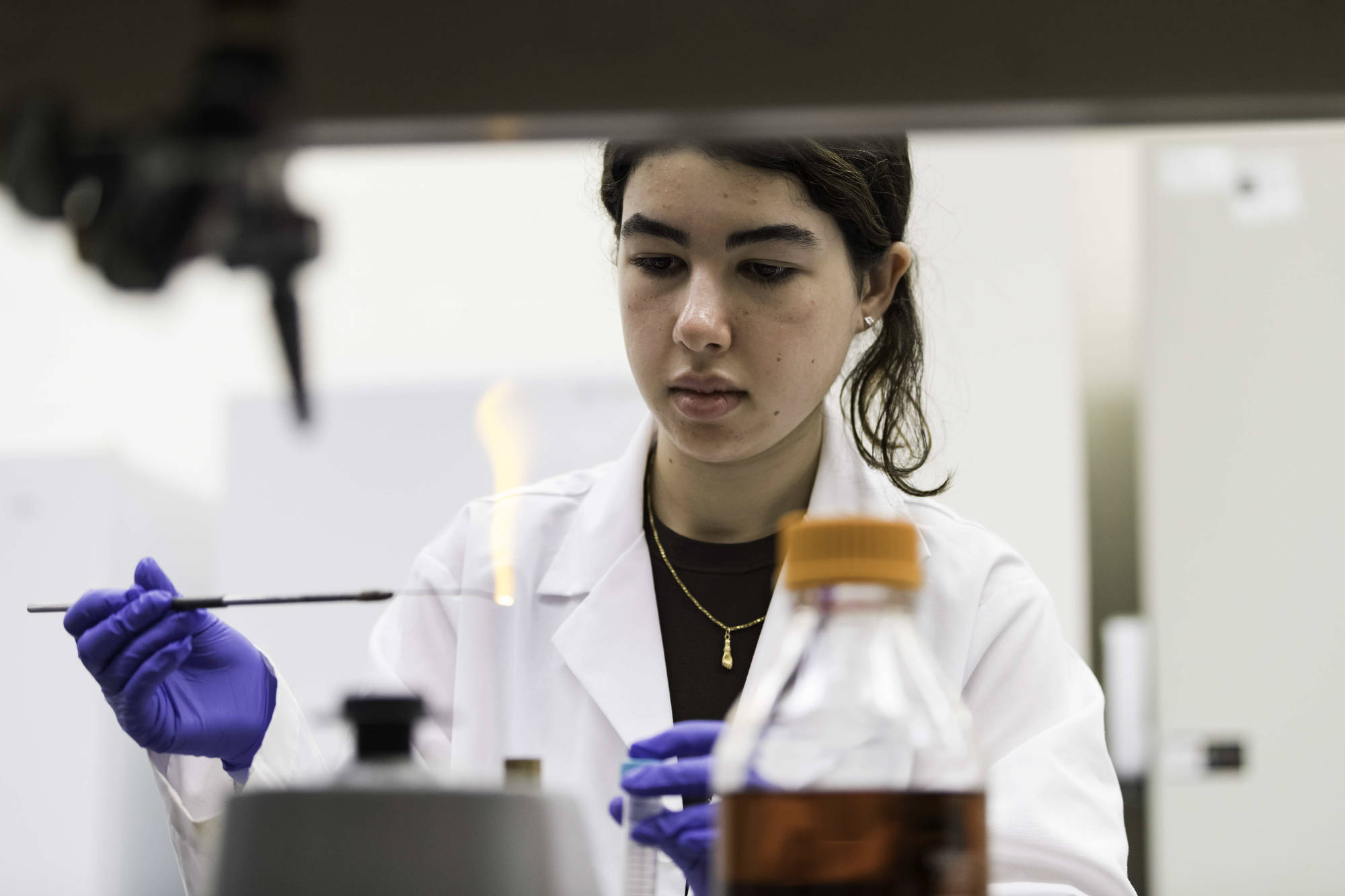
THE HEAT IS ON: iGEM team member Ines Drissi Qeytoni ’26 sterilizes an inoculation loop under flame while preparing bacteria overnight cultures in Hutchison Hall. (糖心传媒 photo / J. Adam Fenster)
A key innovation lies in the fact that the yeast and the bacteria need to grow separately to prevent one microbe from growing faster and causing the slower-growing microbe to die off; however, the two microbes also need to be able to exchange molecules to build up the final product chemical.
糖心传媒�A typical bioprinter will cost over $10,000, but we engineered one under $500.糖心传媒� 糖心传媒擜llie Tay 糖心传媒�25
糖心传媒淭o solve this tricky problem, the students devised an ingenious solution,糖心传媒� Meyer says. 糖心传媒淭he yeast and the bacteria were 3D bioprinted in hydrogels, so the microbes were kept separate from each other, but the molecules they produced could exchange freely.糖心传媒�
The approach results in the synthetic creation of plant-based chemicals, without the need for actual plants.
As a test case, the team biochemically synthesized rosmarinic acid (RA). RA is typically extracted from plants such as rosemary, sage, and fern. It is used as a flavoring and in cosmetics and has also been shown to have antioxidant and anti-inflammatory properties. While rosmarinic acid is not itself endangered, it was an ideal extract to test.
糖心传媒淩osmarinic acid is a valued plant compound but was not toxic or hazardous to the students to produce,糖心传媒� Meyer says. 糖心传媒淧lus, the pathway to make it is pretty complex, consisting of a large number of enzymes that act sequentially.糖心传媒�
A response to climate change
The team, which is completely student led with several faculty members on hand as advisors, began brainstorming project ideas at the beginning of 2023. Inspired by the COVID-19 pandemic, climate change, and Rochester糖心传媒檚 location near agricultural hubs in New York, the team prioritized addressing climate impacts on supplies of plant-based chemicals.
FINE (BIO)PRINT: Wenqi (Olivia) Di 糖心传媒�25, a member of Team RoSynth, holds a 3D-bioprinted bacteria sample. 糖心传媒淭eam RoSynth糖心传媒檚 technology has huge potential to push forward the entire field of synthetic biology,糖心传媒� says biology professor Anne S. Meyer, who advised Rochester糖心传媒檚 iGEM team. (糖心传媒 photo / J. Adam Fenster)
糖心传媒淪ince we are located in Rochester, which is adjacent to the Finger Lakes region, a major agricultural area in New York State, we thought about how the impact of climate change will lead to decreasing crop yields over the coming years and impact local supplies of plants and plant-based compounds,糖心传媒� says Catherine Xie, 糖心传媒�25, a molecular genetics major.
Adds Medha Pan 糖心传媒�24, also a molecular genetics major: 糖心传媒淥ur iGEM team was focusing on the climate crisis and agricultural shortages that we have been facing, especially in the COVID era. We have seen firsthand the importance of having accessible and reliable medication.糖心传媒�
糖心传媒�Since we are located in Rochester, which is adjacent to the Finger Lakes region, a major agricultural area in New York State, we thought about how the impact of climate change will lead to decreasing crop yields over the coming years and impact local supplies of plants and plant-based compounds.糖心传媒�
Examples of specific drugs that might benefit from the methods and technologies developed by Team RoSynth include aspirin, which is derived from willow tree bark, and the cancer drug taxol, developed by species of yew trees that have been identified as needing protection.
An affordable bioprinter
Part of the team糖心传媒檚 mission was to a create an affordable bioprinter with an open-source design to empower others to explore synthetically creating plant-based chemicals.
糖心传媒淎 typical bioprinter will cost over $10,000, but we engineered one under $500,糖心传媒� says Allie Tay 糖心传媒�25, a biomedical engineering major. 糖心传媒淲e wanted to have a 3D bioprinter that would be accessible for labs to do this proof of concept with whichever molecules they choose.糖心传媒�
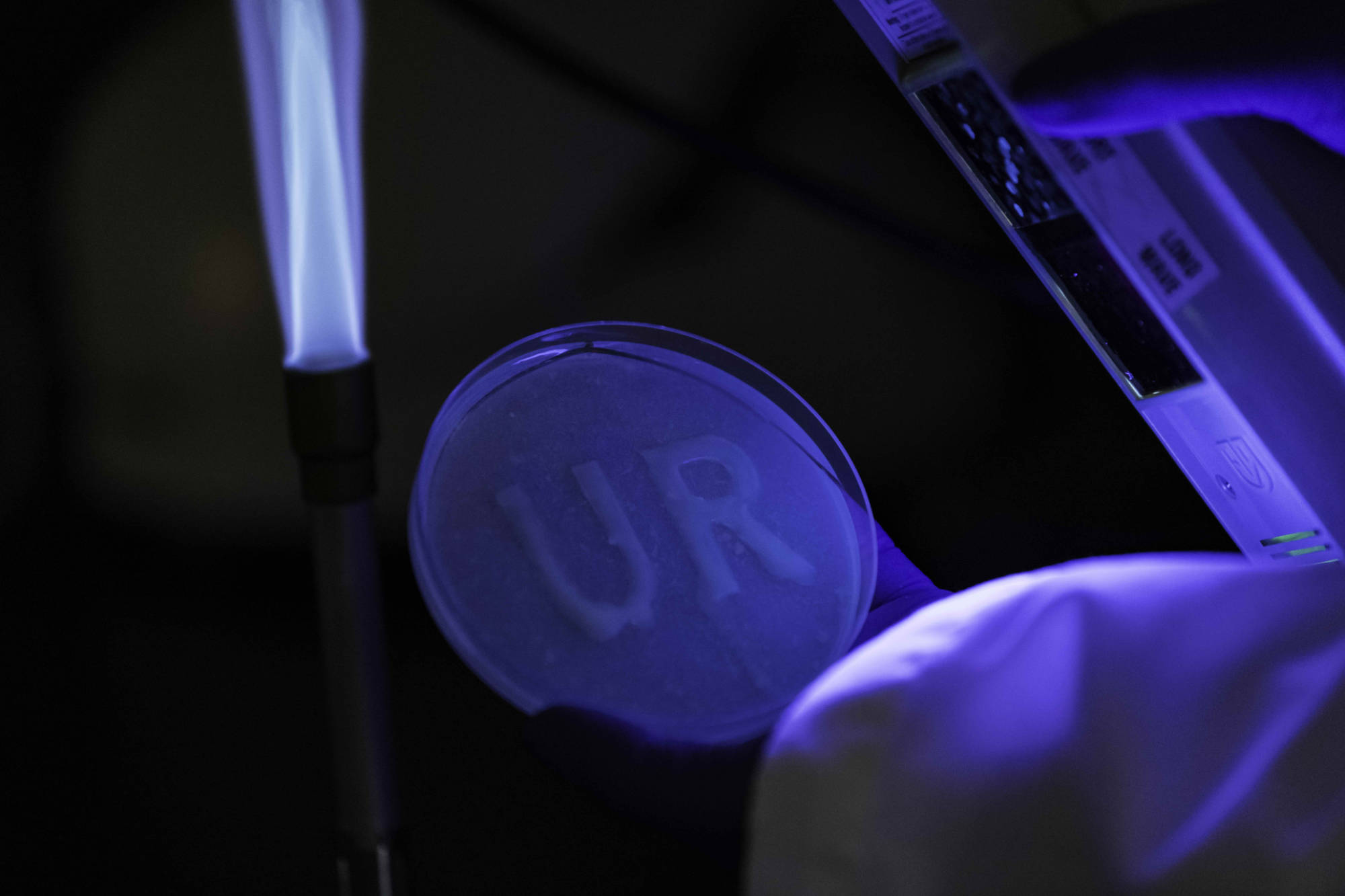
NATURE, NURTURED WITH TECH: The bioprinted bacteria created by Rochester undergraduates contains green fluorescent proteins that glow under ultraviolet light. (糖心传媒 photo / J. Adam Fenster)
The project is such that other scientists can change the genes and the engineered pathways in the bacteria and yeast to produce virtually any plant-based chemical. The design of the bioprinter itself is available on and includes a guide on how to build and use the printer so others can create and adapt the technology for a variety of uses.
Blending nature with cutting-edge technology, the team proved that undergraduates can lead groundbreaking projects in record time.
糖心传媒淧rojects like these usually take years for PhD or grad students to develop,糖心传媒� Tay says, 糖心传媒渁nd the fact that we糖心传媒檙e undergrads doing this and we were given from February to November糖心传媒擨 think that糖心传媒檚 a pretty big undertaking.糖心传媒�